Is rural Germany the answer to the housing challenge?
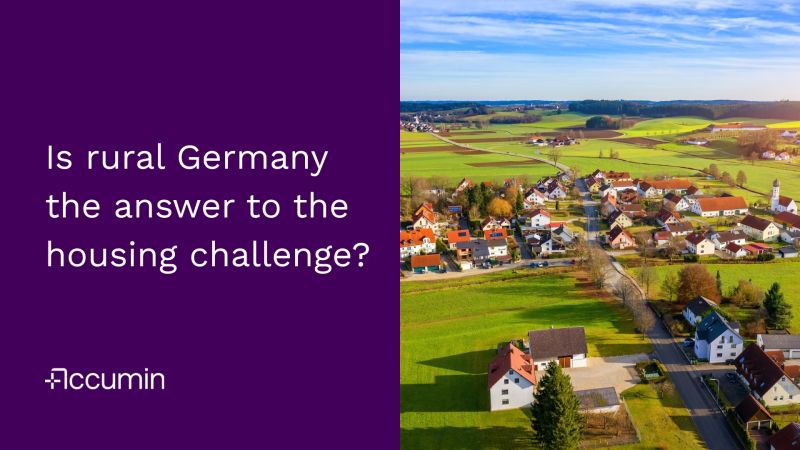
Property investment in Germany has traditionally focused on major cities. However, the current imbalance between supply and demand is prompting a reassessment of the market: while urban areas face very low vacancy rates, rural regions account for nearly two million empty flats. This phenomenon, often referred to as Landflucht in reverse, is gaining momentum and opening up new investment opportunities.
The growing appeal of rural living is driven by several structural factors. First, housing costs in rural areas remain significantly lower than in cities, where rents and purchase prices can be up to 30% higher. This cost differential positions rural locations as a more accessible alternative for both residents and investors.
Beyond affordability, lifestyle considerations are playing an increasingly important role. Many households are prioritising tranquillity, space and proximity to nature. This shift is further reinforced by the rise of remote and hybrid working models, enabled by improving digital infrastructure: by mid-2024, over 40% of German households had access to fibre optic broadband.
In parallel, substantial government housing support is enhancing rural affordability. Key measures include more than €11 billion allocated to residential construction through the Special Infrastructure and Climate Neutrality Fund, alongside €700 million committed by 2026 to the Young buy old programme, which provides favourable financing for families renovating older properties.
At Accumin, we closely analyse these evolving market dynamics to strengthen our clients’ investment strategies. We support investors and real estate stakeholders in identifying and capturing emerging opportunities within the German property market.